Mineral Wool Board for Industrial Equipment Insulation is a semi-rigid or rigid insulation product made from mineral fibers, commonly derived from basalt, slag, or other inorganic raw materials. I use the term broadly here to cover rock wool board, stone wool board, and mineral wool insulation board specified for tanks, vessels, boilers, furnaces, ducts, piping, ovens, and process equipment. Industrial products commonly reach maximum service temperatures near 1200°F (650°C), while ASTM C612 governs mineral fiber block and board insulation requirements.
The correct board depends on more than temperature. I evaluate density, thickness, equipment geometry, thermal conductivity at the operating temperature, moisture exposure, jacketing, corrosion-under-insulation risk, thermal cycling, and personnel-protection limits. This guide explains where mineral wool board fits, how it compares with calcium silicate, ceramic fiber, aerogel, and other high-temperature materials, and how I would develop a practical specification for an industrial insulation project.

Mineral wool board is used to reduce heat transfer from hot equipment, control external surface temperature, support fire protection strategies, and reduce sound transmission. Industrial boards are available in multiple densities and thicknesses, allowing the insulation system to be adapted to flat walls, curved tanks, irregular vessels, removable covers, and equipment requiring metal jacketing. A representative industrial board range includes densities of approximately 64, 96, 128, 160, and 192 kg/m³, with standard thicknesses from about 25 mm to 127 mm depending on the product line.
| Equipment or system | Typical insulation purpose | Main design concern |
|---|---|---|
| Storage tanks and vessels | Heat-loss reduction and personnel protection | Curvature, wind loading, moisture, and jacketing |
| Boilers and hot-water equipment | Thermal retention and surface-temperature control | High operating temperature and access panels |
| Furnaces and industrial ovens | Heat containment and fire resistance | Temperature limit, thermal cycling, and shrinkage |
| Process ducts and air systems | Heat retention or temperature separation | Expansion joints, supports, and removable sections |
| Piping and valves | Heat-loss reduction and worker protection | Small radii, fittings, and inspection access |
| Manufacturing equipment | Thermal stability and acoustic control | Irregular geometry and vibration |
For a flat tank or vessel, I normally consider board insulation with mechanical fastening and a weather-resistant metal jacket. For piping and small-radius components, mineral wool blankets, molded sections, or calcium silicate may provide a more practical fit. Board remains useful around equipment skirts, access doors, combustion chambers, duct panels, and large rectangular surfaces where dimensional stability matters.
Mineral wool board limits conduction through its fiber structure, but its thermal conductivity increases as mean temperature rises. Representative industrial data list an R-value of approximately 4.2 to 4.3 per inch at 75°F for selected board densities, measured under ASTM C518 procedures; the actual heat-loss calculation must use temperature-dependent conductivity rather than the room-temperature value alone.
The material also supports acoustic treatment because its fibrous structure absorbs airborne sound, although equipment noise control requires a complete system assessment that includes casing, gaps, vibration paths, and source frequency. For fire-related specifications, industrial mineral wool boards may be tested as noncombustible under ASTM E136 and may achieve flame-spread and smoke-developed results under ASTM E84 or UL 723. One representative industrial board specification reports unfaced flame spread and smoke-developed values of 0/0 or less, with faced assemblies at 25/5 or less.
The question “What temperature can mineral wool board withstand?” cannot be answered with one value for every product. A high-temperature industrial board may be rated to 1200°F (650°C), while ceiling-oriented mineral wool panels, general building boards, or faced products may have different limits. I would not approve a product based only on the words “rock wool” or “mineral wool”; the specification must state the maximum service temperature, hot-surface performance, dimensional stability, facing limits, and installation method.
A representative 1200°F industrial board is produced in nominal densities from 4 to 12 lb/ft³, equivalent to approximately 64 to 192 kg/m³. Standard sizes may include 24 by 48 inches and 36 by 48 inches, with thicknesses commonly ranging from 1 to 5 inches; some product lines extend to 10 inches. ASTM C612 classification, ASTM C447 maximum service temperature, ASTM C356 in-service shrinkage, ASTM C518 thermal conductivity, ASTM E136 noncombustibility, ASTM E84 or UL 723 surface burning, and ASTM C1104 moisture sorption are relevant specification references.
| Property | Example industrial specification range or requirement |
|---|---|
| Maximum service temperature | Up to 1200°F (650°C) for selected industrial boards |
| Nominal density | Approximately 64–192 kg/m³ for representative products |
| Standard thickness | Approximately 25–127 mm; some lines extend to 254 mm |
| Standard board size | Approximately 610 × 1219 mm or 914 × 1219 mm |
| In-service shrinkage | Example: 0% at 1050°F and less than 2% at 1200°F |
| Moisture sorption | Example: less than 1% by weight under stated test conditions |
| Fire testing | ASTM E136, ASTM E84, UL 723, or equivalent specified tests |
| Material standard | ASTM C612 mineral fiber block and board insulation |
Density should not be treated as a universal measure of performance. The National Insulation Association explains that ASTM C612 addresses thickness, mass per unit area, apparent thermal conductivity, hot-surface performance, tensile strength, and combustibility rather than using density alone as the performance definition.
I select mineral wool board by matching the material to five project variables: equipment geometry, operating temperature, heat-loss target, personnel-protection limit, and environmental exposure. A flat vessel may accept a higher-density board with pins and washers, while a curved duct or removable valve cover may require a more flexible or segmented system. The board must also fit around stiffeners, supports, nozzles, access doors, expansion gaps, and inspection points without creating uninsulated bridges.
Lower-density boards generally reduce weight and can be easier to cut, while higher-density boards may provide greater rigidity, compression resistance, and handling stability. For vertical equipment, vibration-prone machinery, or areas subject to impact, I would generally investigate a higher-density industrial board, but I would confirm the manufacturer’s tensile, compressive, and hot-surface data before final selection. Density should not replace a structural fastening calculation or a complete jacketing design.
The correct answer to “How thick should mineral wool board be for industrial insulation?” comes from a heat-transfer calculation, not a fixed rule. The calculation should include operating temperature, ambient temperature, wind, jacket emissivity, board conductivity at mean temperature, allowable outer-surface temperature, heat-loss target, and available space. As a preliminary comparison, a 2-inch layer using an R-value near 4.2 per inch at 75°F would have approximately R-8.4 under that reference condition, but the effective value at elevated temperature will differ.
For personnel protection, I typically work backward from the maximum acceptable outer-surface temperature rather than beginning with a standard thickness. For energy reduction, I compare annual heat loss before and after insulation, then calculate payback from fuel or electricity prices, operating hours, and insulation-system cost. The project specification should list the required thickness at each service location instead of applying one thickness to every piece of equipment.
Mineral wool can be water-repellent, but no fibrous insulation system should be left exposed to persistent rain, washdown, condensation, or process leaks. A metal jacket, sealed joint system, flashing, and properly detailed penetrations are needed where moisture is possible. Representative industrial board data report water-vapor sorption below 1% by weight under specified laboratory conditions, but field performance still depends on jacket integrity and drainage.
Corrosion-under-insulation risk is controlled through surface preparation, compatible insulation chemistry, drainage, jacketing, vapor management, inspection access, and correct operating procedures. For stainless steel, I would request compliance with applicable corrosion tests such as ASTM C795, ASTM C871, and ASTM C692. For carbon steel, I would verify the specified corrosivity requirements and ensure that damaged jackets, wet insulation, and unsealed penetrations are repaired before corrosion develops.
The comparison between mineral wool board vs calcium silicate insulation is mainly a comparison of system priorities. Mineral wool generally offers lower weight, acoustic absorption, noncombustible performance, and easier cutting around complex equipment. Calcium silicate is rigid, compression-resistant, and commonly selected where the insulation must carry mechanical loads or maintain shape around high-temperature piping and equipment.
| Factor | Mineral wool board | Calcium silicate | Design implication |
|---|---|---|---|
| Typical industrial temperature range | Selected boards up to 1200°F (650°C) | Product-dependent, often used for higher-temperature rigid systems | Confirm the exact service limit |
| Flexibility and cutting | Easier to cut and fit around irregular surfaces | More rigid and prone to breakage during complex fitting | Mineral wool may reduce installation time on irregular geometry |
| Acoustic absorption | Fibrous structure supports sound absorption | Usually less effective as a stand-alone acoustic absorber | Mineral wool may suit noisy equipment enclosures |
| Compression resistance | Depends strongly on density and facing | Generally strong for rigid support applications | Calcium silicate may suit load-bearing areas |
| Moisture response | Requires complete jacketing and drainage | Also requires moisture control and drying procedures | Neither material should be treated as waterproof |
| Thermal cycling | Product-specific; verify shrinkage and cycling data | Product-specific; verify cracking and joint behavior | Use tested assemblies for repeated heat-up and cool-down |
For equipment operating above 1200°F, I would compare ceramic fiber board, insulating firebrick, calcium silicate, microporous or aerogel systems, and other high-temperature boards. Ceramic fiber generally supports higher temperatures, but it may have different mechanical, health, handling, shrinkage, and surface-durability requirements. Aerogel can reduce thickness where space is severely limited, but the project must justify its higher material cost through space savings, energy reduction, or access constraints.
Before installation, I inspect the equipment surface for oil, loose scale, moisture, sharp projections, and leaks. I verify that the board, fasteners, adhesives, pins, washers, sealants, jacket materials, and removable covers match the approved specification. Representative industrial guidance calls for clean, dry surfaces and requires installation according to project drawings, manufacturer instructions, and recognized commercial and industrial insulation practices.
I cut boards tightly around penetrations while avoiding excessive compression that reduces thickness. Joints should be staggered where multiple layers are used, gaps should be minimized, and fasteners should be arranged to support the board without crushing it. Aluminum or stainless-steel jacketing may be selected according to temperature, weather, chemical exposure, and corrosion-control requirements; one representative specification lists 0.016-inch aluminum and 0.010-inch stainless-steel jacketing options.
Thermal cycling requires particular attention. I check whether the product permits direct installation on a hot surface, whether staged heat-up is required, and whether the board has a documented shrinkage value at the operating temperature. One industrial board data sheet states that the product may be installed directly on hot surfaces without a shutdown and staged heat-up, but that instruction is product-specific and should not be generalized to every mineral wool board.
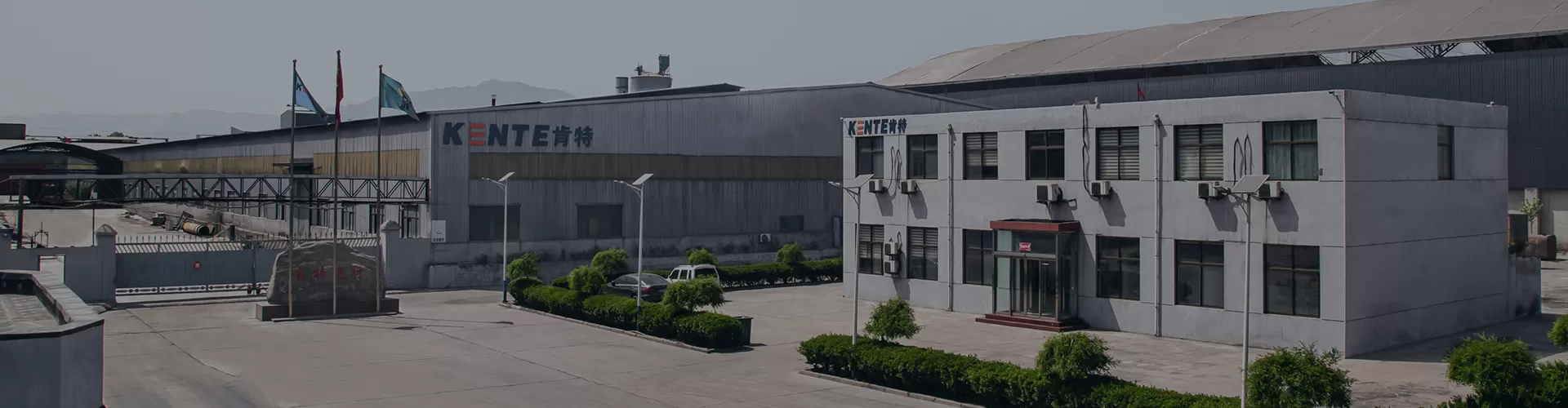
KENTE describes itself as a manufacturer and supplier of mineral wool board, ceiling systems, painted T-grid, and related products, with company operations dating to 2002 and reported production capacity of 50,000 square meters per day on a single line. Its published mineral wool board information is primarily positioned around ceiling-system applications and customized building scenarios.
For industrial equipment insulation, I would request a separate technical submittal before approving any KENTE Mineral Wool Board or comparable product. The submittal should identify the ASTM C612 classification, maximum service temperature, density, thermal conductivity at the design temperature, thickness tolerance, shrinkage, moisture behavior, noncombustibility, surface-burning results, corrosion testing, and recommended jacketing system. A ceiling board specification should not be assumed to meet the requirements of boilers, tanks, furnaces, ducts, or process equipment without documented industrial test data.
| Material | Best-fit application | Main limitation |
|---|---|---|
| Mineral wool board | Tanks, vessels, boilers, ducts, ovens, and equipment near 1200°F | Needs careful moisture and jacketing control |
| Calcium silicate | Rigid, high-temperature piping and load-resistant equipment areas | More difficult to cut around complex geometry |
| Ceramic fiber board | Furnaces and zones above typical mineral wool limits | Requires careful handling and dimensional-stability review |
| Aerogel blanket or board | Thin insulation where clearance is severely restricted | Higher material cost and different installation controls |
| High-temperature firebrick or refractory board | Furnace linings and direct flame or radiant heat zones | Heavy, rigid, and less suitable for removable equipment jackets |
The main selection issue is not whether one material is universally better. Mineral wool board is often a balanced option for noncombustible thermal and acoustic control up to a documented service limit, while ceramic fiber or refractory products may be more appropriate above 1200°F. Calcium silicate may be preferable where rigidity and compression resistance dominate, and aerogel may be considered where thickness has a greater economic impact than material price.
Mineral Wool Board for Industrial Equipment Insulation is a practical choice for tanks, vessels, boilers, furnaces, ducts, piping, ovens, and process machinery when the selected product has verified temperature, thermal, fire, moisture, and corrosion data. I recommend specifying the board by ASTM classification, maximum service temperature, density, thickness, thermal conductivity at operating temperature, dimensions, shrinkage, and jacketing requirements rather than by the generic term “rock wool.”
For equipment at or below approximately 1200°F (650°C), compare mineral wool board with calcium silicate based on geometry, compression needs, acoustic goals, moisture exposure, and installation access. For service above 1200°F, evaluate ceramic fiber, refractory board, calcium silicate, aerogel, or other high-temperature systems using documented test data. KENTE can be considered as a supplier for mineral wool board products, but industrial approval should follow a product-specific technical review rather than a ceiling-product description alone.
The next practical step is to prepare an equipment schedule listing surface area, operating temperature, ambient conditions, allowable outer-surface temperature, heat-loss target, exposure to water or chemicals, and required jacket material. That schedule allows the insulation thickness, density, fastening method, and lifecycle cost to be selected for each equipment category instead of applying one board specification across the entire facility.
Previous: None


